Longhua District has launched China’s first HarmonyOS-powered, multi-energy near-zero carbon water plant, marking a new step in integrating smart technology with low-carbon urban infrastructure.
The project, located at the Xikeng Water Plant in Guanlan and developed by Longhua Water Affairs Co., combines solar power, micro hydropower, energy storage and grid electricity under a unified intelligent management platform. It has also been selected as one of Shenzhen’s first batch of near-zero carbon pilot projects.
Designed as a scalable model for green utilities, the plant is expected to generate more than 3.2 million kilowatt-hours of clean electricity annually, reducing carbon emissions by around 1,400 tons.
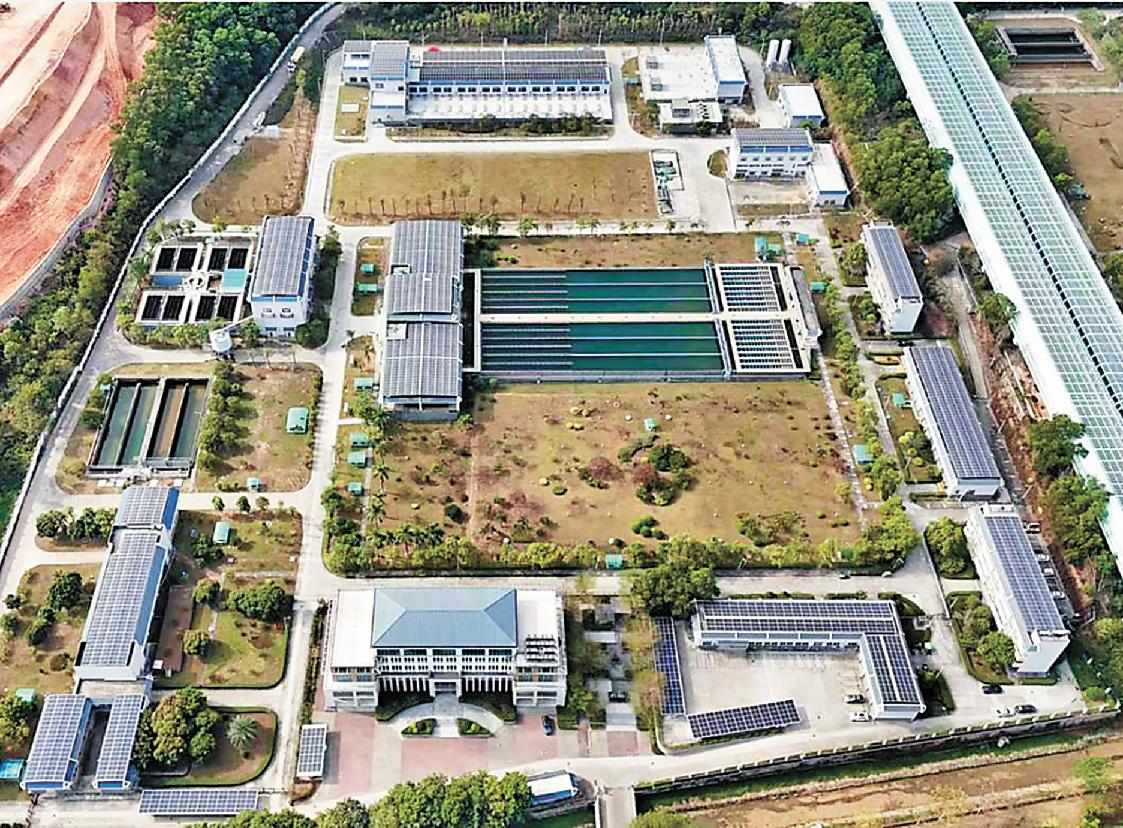
The HarmonyOS-based “water–solar–storage–charging” integrated energy project at Xikeng Water Plant in Guanlan, Longhua District. Photos by Chen Jianhua, Dai Hanlin
Turning infrastructure into power assets
A key feature of the project is its rooftop solar installation. More than 3,100 high-efficiency photovoltaic panels have been installed across sedimentation tanks, filtration basins and clean-water reservoirs, forming a 1.87-megawatt distributed power network.
Since being connected to the grid in February, the system has reached a daily peak generation of over 10,000 kWh, with more than 97% of the electricity consumed on-site — a high utilization rate that significantly reduces reliance on external power.
Harnessing water flow for clean energy
The plant also leverages its existing water intake system to produce electricity. Using a natural 14-meter drop in water flow, a 160-kilowatt micro hydropower unit generates about 1 million kWh annually without affecting water quality or supply.
Together, solar and hydropower form a stable, locally sourced renewable energy mix tailored to the plant’s operations.
Energy storage and smart control improve efficiency
To address fluctuations in energy supply and demand, the project includes a 645 kWh battery storage system. Acting as an “energy buffer,” it charges during off-peak hours and discharges when electricity demand or prices are higher.
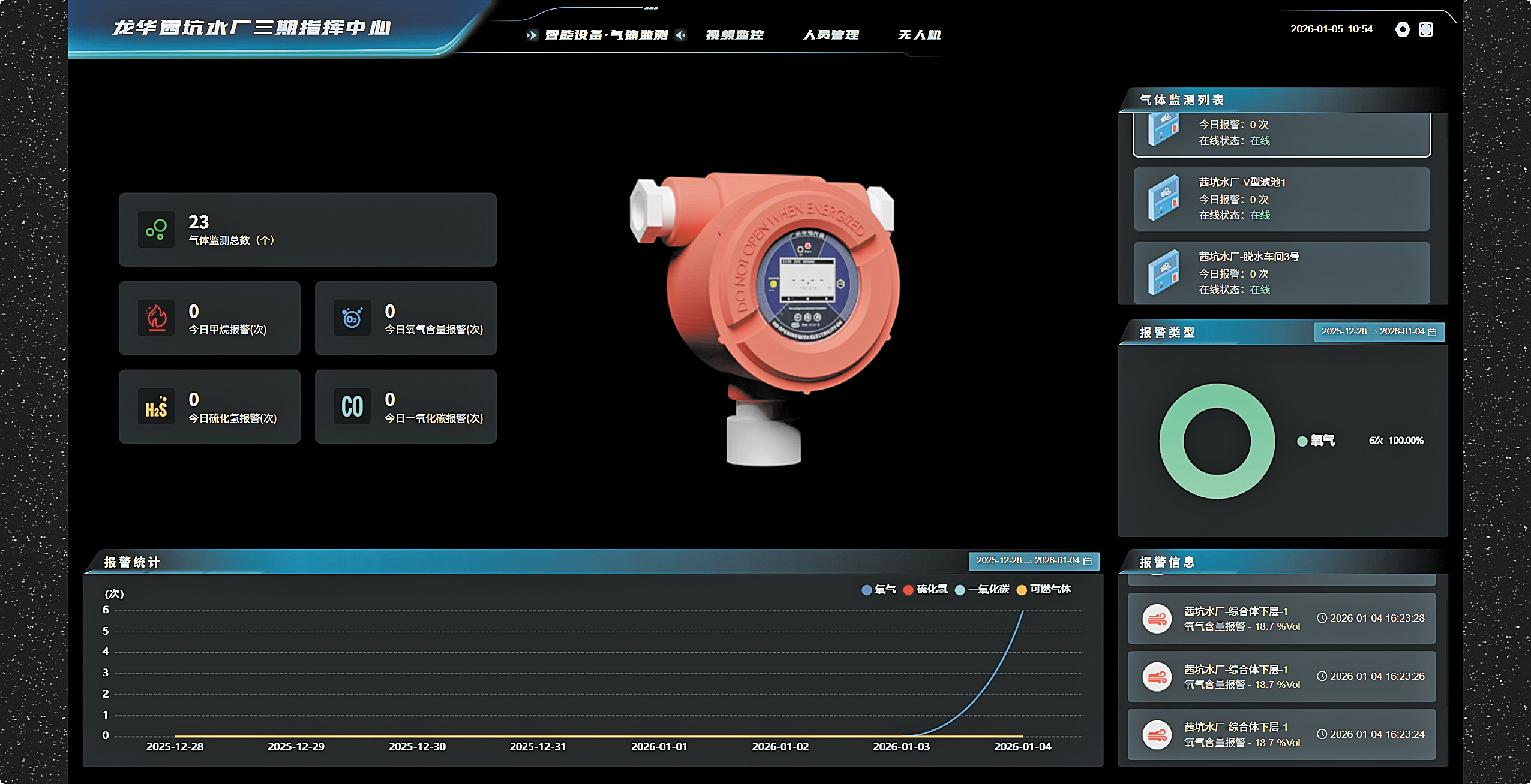
A real-time dashboard of the smart management system at Phase III of Xikeng Water Plant in Longhua District, displaying gas monitoring, equipment status and safety alerts.
At the core of the system is a HarmonyOS-based intelligent energy management platform that connects all generation, storage and consumption units into a unified network.
The platform provides real-time monitoring and visualized data across the plant, improving management efficiency by around 30%. It also enables predictive maintenance, identifying potential equipment issues seven to 15 days in advance and improving operational efficiency by about 15%.
Using AI-driven optimization, the system dynamically balances energy supply and demand, maximizing the use of renewable power. This has increased green energy utilization by 18% while reducing overall electricity costs by roughly 15%.
A scalable model for low-carbon utilities
By integrating “solar, water and storage” with intelligent coordination, the Xikeng project demonstrates how traditional water infrastructure can be transformed into a low-carbon, digitally managed system.
Local authorities plan to extend the model across multiple water plants in Longhua, enabling coordinated energy dispatch and laying the groundwork for a district-level virtual power plant.
Without written authorization from Longhua District People's Government,the content of the site shall not be republished or used in any form
Technical support hotline: 0755-23332038






