A new generation of shared bicycles powered by HarmonyOS has arrived in Shenzhen's Longhua District, highlighting the district's growing role as a real-world testing ground for smart mobility technologies.
Two HarmonyOS-equipped bicycle models from major bike-sharing operators Didi Qingju and Hello Bike have recently been introduced at the HarmonyOS Ecosystem (Longhua) Innovation Center Experience Hall, offering a glimpse into how domestically developed operating systems and chips are finding practical applications in everyday urban life.
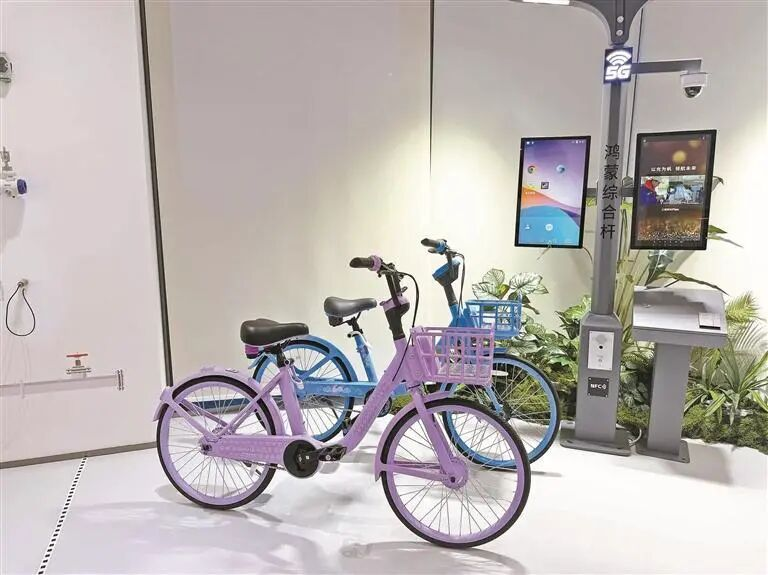
Two HarmonyOS-powered shared bicycles are displayed at the HarmonyOS Ecosystem (Longhua) Innovation Center in Longhua District. Bao'an Daily
The move is part of Longhua's broader effort to use transportation scenarios to accelerate technological innovation while improving urban services.
On May 13, Didi Qingju unveiled its BM3.0 HarmonyOS shared bicycle at the Shenzhen Conference on the High-Quality Development of Domestic Operating Systems and Chips. The model features NFC-based unlocking and low-power wireless connectivity, allowing users to unlock bikes with a simple tap.
At around the same time, Hello Bike's A70 "Cloud Bike" was introduced at the Longhua innovation center. Equipped with a Huawei HiSilicon chip and the OpenHarmony operating system, the model is among the first shared bicycles to integrate domestically developed chips, operating systems and the BeiDou Navigation Satellite System throughout the entire technology chain.
Longhua officials see such deployments as an example of how everyday mobility can help accelerate the commercialization of new technologies. The district has introduced policies supporting innovation in areas including funding, facilities, certification and talent development.
Drones and autonomous vehicles expand smart logistics

Autonomous delivery vehicles loaded with parcels are prepared for a delivery run at a logistics facility in Longhua District. Chen Jianhua
The shared bicycle projects form part of a broader smart mobility ecosystem taking shape in Longhua.
The district has emerged as one of Shenzhen's leading hubs for the low-altitude economy. By the end of May 2026, Longhua had built 220 drone takeoff and landing facilities and opened 123 low-altitude routes, supporting approximately 180,000 drone logistics flights.
On the ground, autonomous delivery vehicles are also becoming increasingly common. Since 2024, Longhua has supported road testing and operations of unmanned delivery vehicles, helping build a logistics network that extends beyond traditional last-mile services.
According to district data, 280 autonomous delivery vehicles are currently operating in Longhua, completing more than 1,000 deliveries daily and accumulating over 9 million kilometers of safe driving distance.
Building a safer battery-swapping network
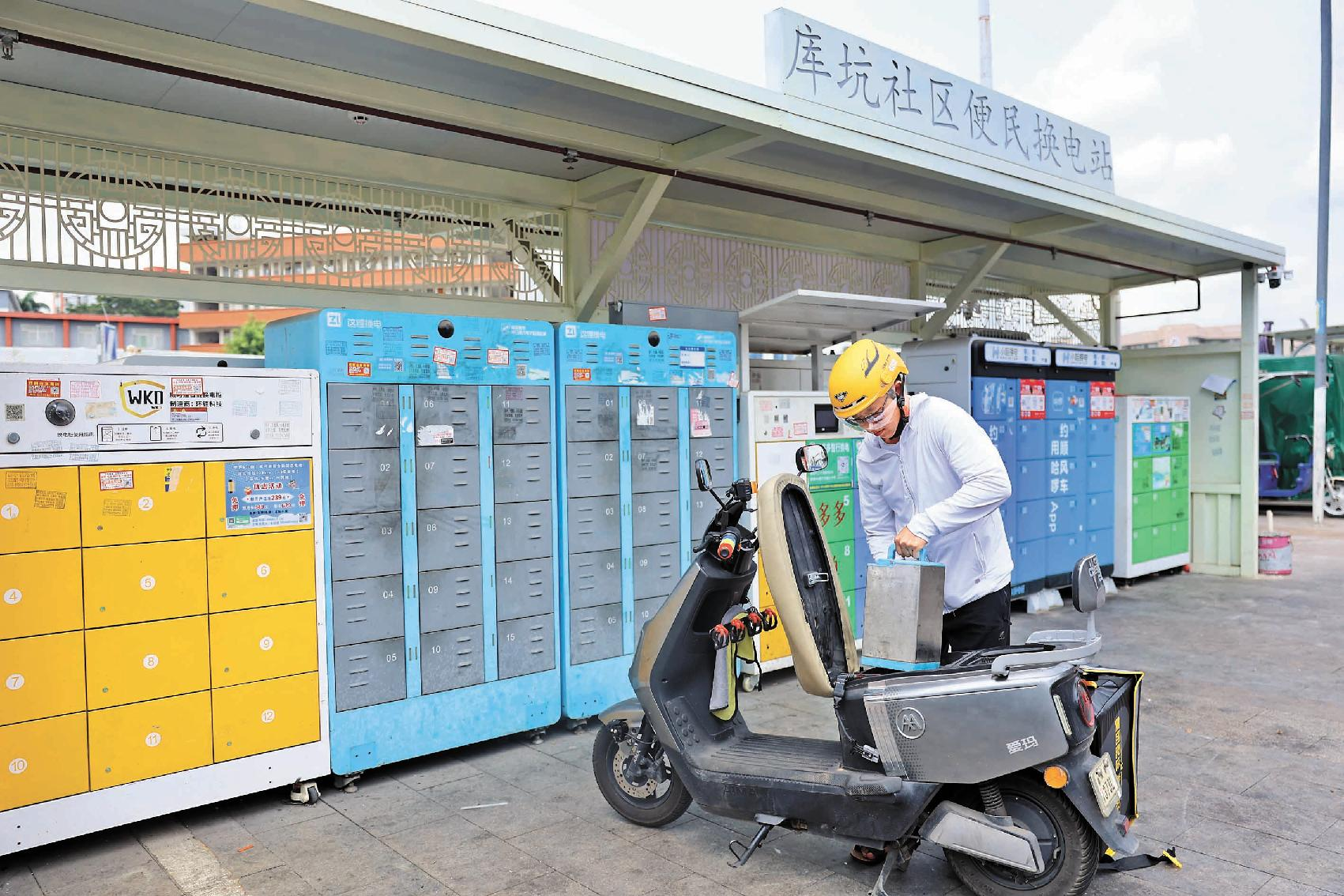
An electric bicycle user swaps batteries at a community battery-swapping station in Longhua. Chen Jianhua
The district is also applying innovation to address practical urban management challenges. To improve electric bicycle safety, Longhua is promoting battery-swapping services as an alternative to conventional charging.
Plans have been finalized for the first batch of 300 battery-swapping stations across urban villages, residential communities, industrial parks and commercial areas, forming what officials describe as a "15-minute battery-swapping circle" for residents.
From HarmonyOS-powered bicycles and autonomous delivery vehicles to drone logistics and battery-swapping networks, Longhua is increasingly using real-life urban scenarios to test and deploy new technologies.
For residents, the changes promise more convenient and sustainable mobility options. For technology companies, they provide opportunities to bring innovations out of the laboratory and into everyday use.
Without written authorization from Longhua District People's Government,the content of the site shall not be republished or used in any form
Technical support hotline: 0755-23332038






