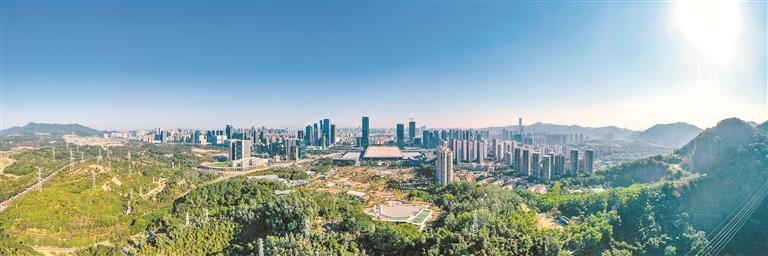
Longhua’s central-axis digital industry hub is one of Shenzhen’s major concentrations of artificial intelligence and digital-economy businesses.

A Yarbo snow-removal robot developed by Longhua-based Hanyang Robotics.
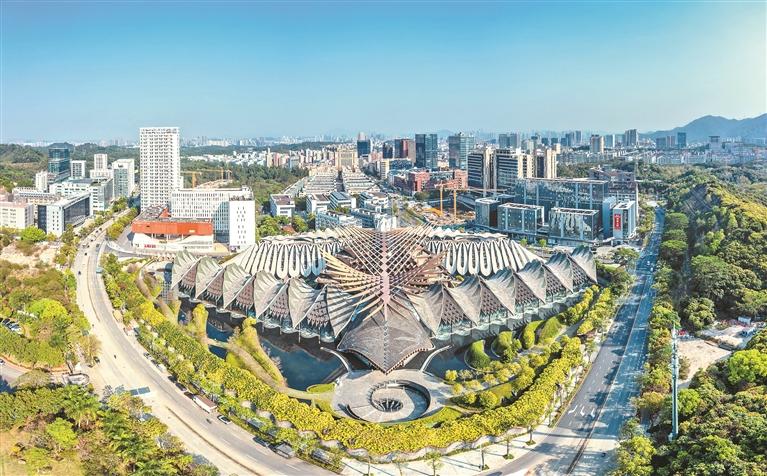
Dalang Fashion Town is a major center for Longhua’s fashion industry and its transition toward digital design and manufacturing.
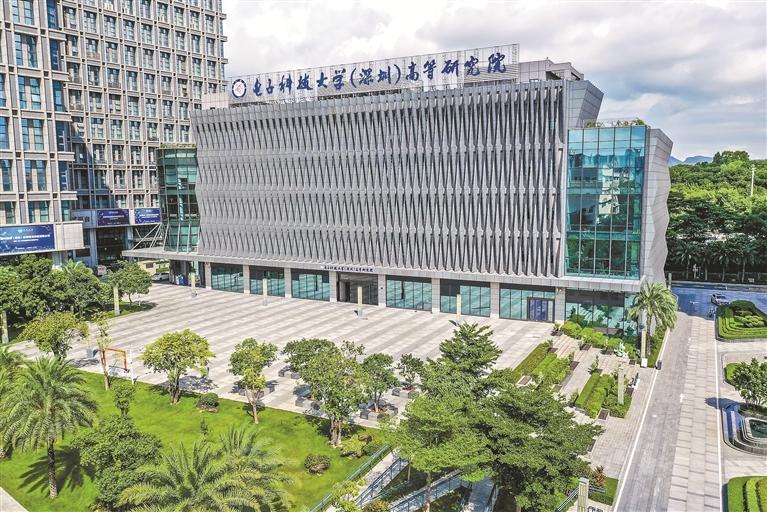
The Shenzhen Institute for Advanced Study of the University of Electronic Science and Technology of China brings research and technology talent to Longhua.
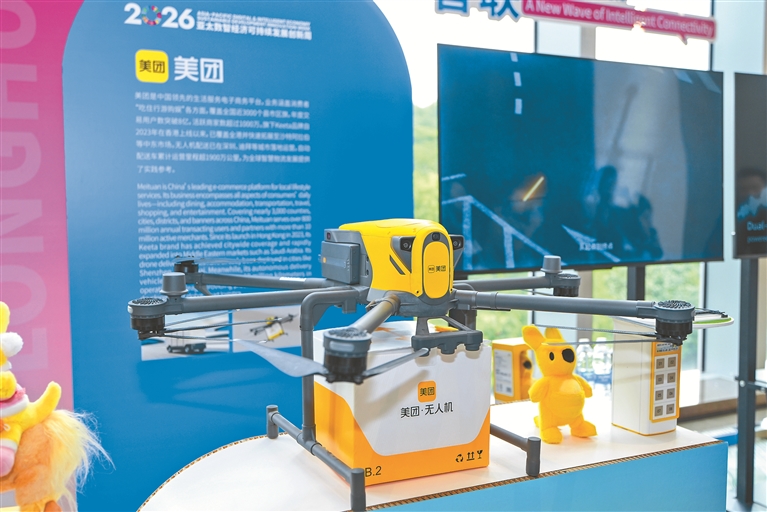
A Meituan drone on display in Longhua, where low-altitude routes are used to deliver food and transport medical specimens.
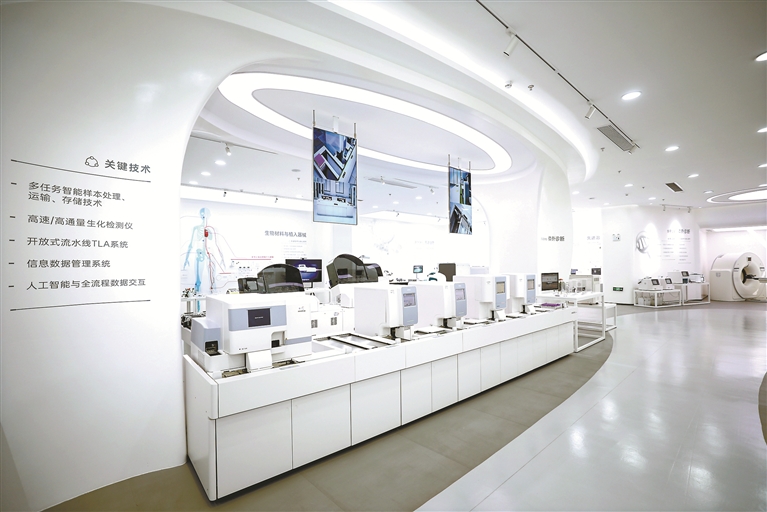
The National Innovation Center for Advanced Medical Devices supports research, product development and commercialization in Longhua’s medical-device sector.
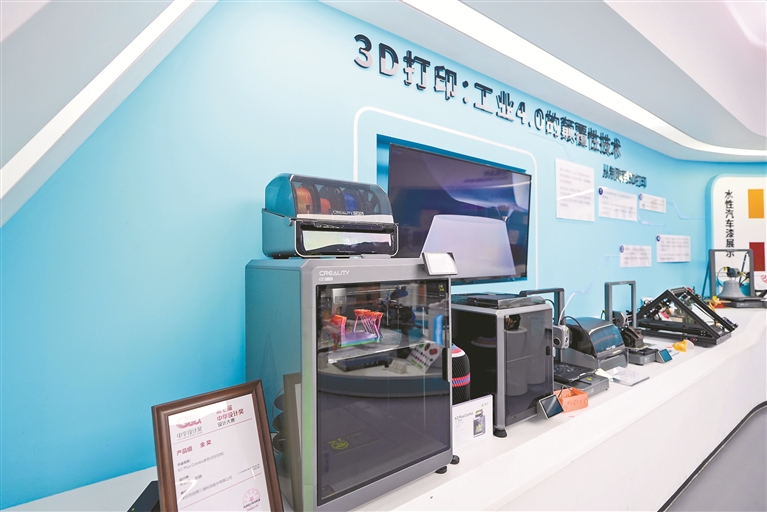
An array of consumer-grade 3D printers made by Longhua-based Shenzhen Creality 3D Technology Co., Ltd.
Palm-sized computers sold around the world, desktop 3D printers that turn ideas into physical objects and drones carrying meals and medical specimens across the city are among the products emerging from Longhua’s growing technology sector.
District figures show that Longhua manufactures about two-thirds of China’s Mini PCs, one-quarter of its 3D-printing equipment, one-sixth of its smartwatches, one-fifteenth of its smartphones and one-twentieth of its industrial robots.
Behind these products is a wider industrial transformation. Over the past five years, Longhua has developed from a major manufacturing base into one of Shenzhen’s leading centers for smart manufacturing and the digital economy, supported by extensive supply chains, research institutions, digital infrastructure and a growing community of technology companies.
The annual industrial output of companies above a designated size has exceeded 720 billion yuan, rising 37.7% over five years and crossing two 100-billion-yuan thresholds. Advanced manufacturing now accounts for about 70% of the added value generated by these companies.
Longhua has developed two industrial clusters with annual output exceeding 100 billion yuan and 11 worth more than 10 billion yuan, spanning artificial intelligence, semiconductors, new energy, medical devices, industrial robotics, low-altitude aviation and digital fashion.
Digital economy gains scale
The number of core digital-economy companies in Longhua has risen from 752 to 1,433 over the past five years. The combined output of its core digital industries has exceeded 500 billion yuan for four consecutive years and has now passed 600 billion yuan.
A tiered business community has also taken shape. The district is home to two unicorns, 11 potential unicorns, 19 seed-stage unicorns and 47 gazelle companies in fields including AI, advanced equipment, semiconductors, new energy, new materials and biomedicine.
Longhua has invested in infrastructure to help both technology companies and traditional manufacturers adopt digital tools. It has established the Guangdong-Hong Kong-Macao Greater Bay Area’s first one-stop public digital-enablement platform and was selected as one of Guangdong’s first industrial internet demonstration bases.
Nearly 50,000 projects have moved onto cloud-based platforms, while a new industrial computing center — the largest single facility of its kind in Shenzhen by scale — has begun operating in the district. Longhua also has more lighthouse factories than any other district in Shenzhen.
Specialized digital clusters have emerged around Shenzhen North Railway Station and other parts of the district. Shenzhen North Software Industry Base has been recognized as a distinctive software industrial park in Shenzhen, while Longhua’s big-data analysis and application software cluster has received provincial-level recognition. The Longhua central development axis has also been included among Shenzhen’s 10 major AI clusters.
The district has 153 software and information technology companies above a designated size, with combined revenue exceeding 16 billion yuan. Shenzhen’s first cross-border e-commerce industrial park dedicated to the digital economy has also opened in Longhua.
Longhua has additionally introduced several industrial applications based on the OpenHarmony operating system, including Shenzhen’s first “industry plus OpenHarmony” application and its first OpenHarmony developer training base. China’s first water purification plant using an OpenHarmony-based intelligent system has entered operation in the district.
Local companies expand globally
CYX Industrial illustrates how Longhua manufacturers are moving up the value chain. Once focused primarily on Mini PCs, the company is expanding into AI workstations, intelligent computing terminals and integrated computing services.
Its parent group employs more than 1,500 people, has annual production capacity exceeding 2 million units and recorded revenue of more than 5 billion yuan in 2025. According to IDC data cited by the district, CYX Industrial accounts for 15% of global Mini PC shipments.
The company and battery manufacturer Grepow have secured land for an AI manufacturing park under a district policy that allows companies to jointly acquire industrial sites for designated projects. The development will provide additional space for intelligent-terminal and drone-power manufacturing.
Longhua’s 3D-printing sector offers another example of a local company developing into a global supplier.
Shenzhen Creality 3D Technology Co., Ltd. began 12 years ago when four founders developed their first machine in a 20-square-meter workspace in Longhua. The company was listed on the Hong Kong Stock Exchange in May 2026 and now sells products in more than 140 countries and regions through more than 2,400 distributors.
Creality’s output value exceeded 3.127 billion yuan in 2025. Based on cumulative shipments from 2020 to 2024, the company held a 27.9% share of the global consumer 3D-printer market, according to district figures. It also ranked first globally in consumer 3D-scanner market share.
The company attributes part of its growth to the concentration of hardware suppliers around Shenzhen. Most of the core components required for a 3D printer can be sourced from leading suppliers within a two-hour drive, allowing products to be tested, refined and manufactured more efficiently.
Other Longhua companies are gaining positions in specialized international markets. Hanyang Robotics is selling robotic snow blowers in the United States, while companies including Jackery and Ruoyu Technology are developing portable solar-energy products and intelligent systems for hazardous industrial environments.
Innovation supports commercialization
Longhua’s research and innovation capabilities have expanded alongside its industries.
The district now has 4,140 national high-tech enterprises, up 51.4% over five years. It has also cultivated 179 national-level “little giant” companies specializing in niche markets, 1,974 municipal-level specialized and innovative small and medium-sized enterprises, and 3,378 innovation-oriented SMEs.
Longhua has established 382 innovation facilities, including 299 at or above the municipal level. The National Innovation Center for Advanced Medical Devices and a Shenzhen branch of a national industrial information security research institution have established operations in the district, bringing national-level innovation platforms to Longhua for the first time.
Research and development spending increased from 10.767 billion yuan in 2021 to 13.81 billion yuan in 2024, equivalent to 4.38% of the district’s gross regional product (GRP).
Research institutions and companies in Longhua have developed technologies including the YashanDB database, a domestically developed extracorporeal membrane oxygenation system, a 5.0-tesla whole-body magnetic resonance imaging system and an AI-based battery grading system.
The district’s medical-device cluster now comprises more than 200 companies and added over 400 Class II and Class III medical-device registrations during the five-year period. About 200 semiconductor and integrated-circuit companies have also established operations in Longhua.
Emerging industries enter daily use
Low-altitude aviation has become another rapidly developing sector. Longhua is home to 445 related companies and 21 innovation platforms, with businesses covering manufacturing, logistics, aerial performances, inspection and entertainment.
The district produced 59,000 civilian drones in the first four months of 2026, up 1,061.2% year on year.
Meituan has turned drone manufacturing and research into everyday services. Its drones can complete food deliveries on selected Longhua routes in about 15 minutes. A medical delivery route serving community health centers has operated for two years and transported more than 280,000 laboratory specimens, reducing some cross-area transport times from around 30 minutes to 10.
Business ecosystem supports continued growth
Longhua has attracted more than 140 major projects over five years, with intended investment exceeding 90 billion yuan. The number of listed companies in the district has increased from 24 to 41, while the combined market capitalization of its domestically listed companies accounts for about one-sixth of Shenzhen’s total.
The district is also home to 91 recognized headquarters enterprises with combined output exceeding 450 billion yuan. Headquarters clusters have developed around the digital economy near Shenzhen North Railway Station, international engineering and design in central Longhua, and modern fashion in Dalang.
Together, these developments have created an ecosystem linking digital technologies, advanced manufacturing, research, capital and commercial applications.
For international businesses and investors, Longhua’s advantage lies in that combination: extensive supplier networks, engineering talent, research resources, computing infrastructure and industrial space that can help companies move from product development to mass production and global expansion.
Without written authorization from Longhua District People's Government,the content of the site shall not be republished or used in any form
Technical support hotline: 0755-23332038






