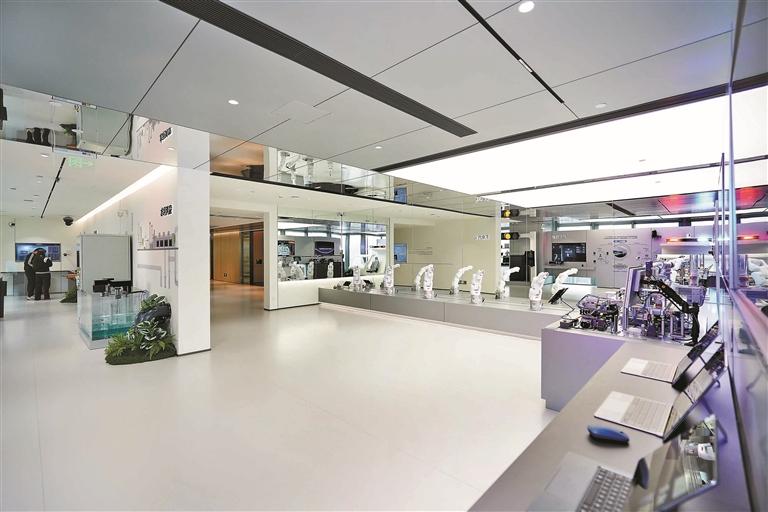
The HarmonyOS Ecosystem (Longhua) Innovation Center supports the development of digital technologies and applications in the district.
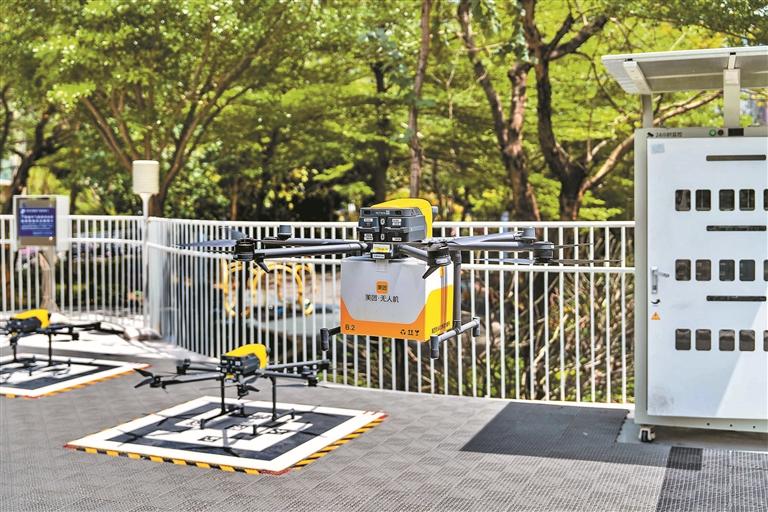
Low-altitude logistics routes operating in Longhua account for one-fifth of Shenzhen’s total, reflecting the district’s expansion into emerging urban mobility services.
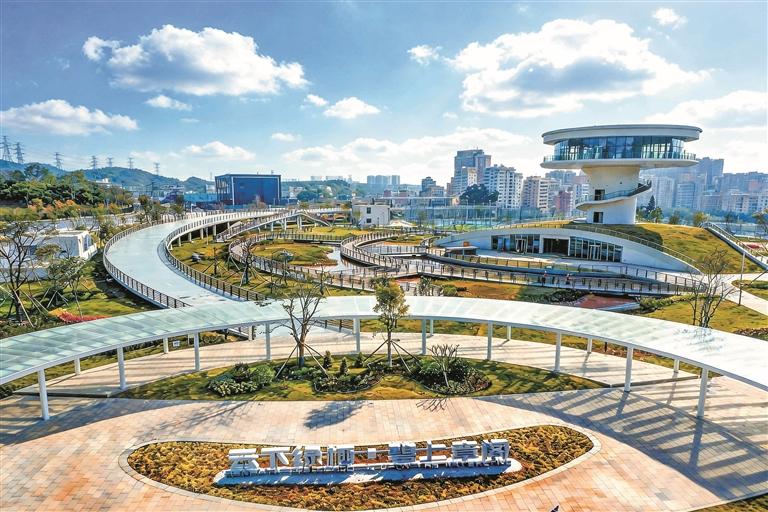
The HarmonyOS-enabled Zhangge Integrated Water Purification Plant uses intelligent systems to improve the monitoring and management of urban infrastructure.
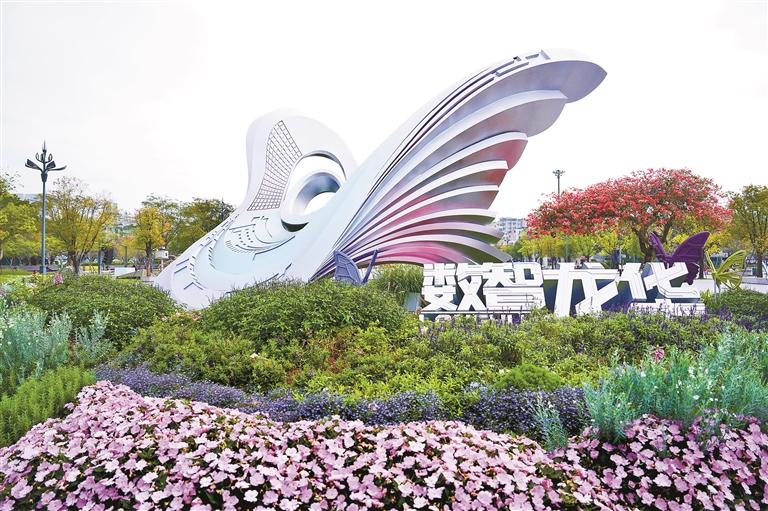
A floral installation highlights Longhua’s drive to build a future city through digital and intelligent transformation.
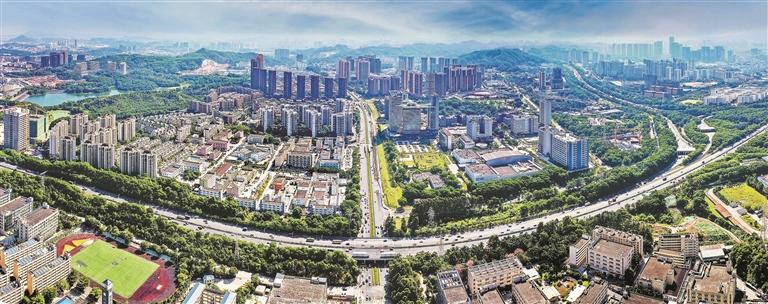
An aerial view of Longhua, where investment in transport, public services and key development areas is supporting the district’s urban and industrial transformation.
Longhua District is moving beyond broad digitalization toward deeper integration of data, artificial intelligence and other intelligent technologies across manufacturing, urban governance and public services.
Building on its “Digital Longhua” initiative, the district has made the development of a digitally enabled and AI-powered Longhua a central part of its next stage of growth. The shift reflects Longhua’s evolution from a traditional industrial area into a major base for the digital economy and intelligent manufacturing.
Under its 2026-2027 action plan for the digital and intelligent transformation of manufacturing, Longhua is promoting the wider use of AI throughout the manufacturing sector.
The annual output of the district’s industrial enterprises above designated size has exceeded 720 billion yuan (US$101 billion), while its intelligent terminal industry is on track to reach an annual output of 200 billion yuan.
Longhua also has more lighthouse factories than any other district in Shenzhen. Recognized by the World Economic Forum, lighthouse factories use technologies such as AI, robotics, advanced analytics and the Internet of Things on a large scale to improve productivity, resilience and sustainability.
The breadth of Longhua’s AI sector was on display at the World AI Device Expo 2026 and the Seventh Shenzhen Global AI Expo in May. Companies from the district presented technologies ranging from computing infrastructure and data services to AI devices, humanoid robots and drone formations.
Longhua is also expanding its presence in the low-altitude economy. Its low-altitude logistics routes account for about one-fifth of Shenzhen’s total, while the district leads the city in the number of takeoff and landing facilities.
These facilities support applications ranging from drone deliveries to public-service operations. The district is working to develop a broader industrial ecosystem covering aircraft, flight-control systems, infrastructure, operations and urban applications.
By the end of the 15th Five-Year Plan period, which runs from 2026 to 2030, Longhua aims to increase its GDP to 600 billion yuan and record cumulative fixed-asset investment of the same amount.
Digital tools reach the community level
Longhua’s technology drive extends beyond industrial development. Digital tools are increasingly being used to address routine problems at the community level and reduce administrative workloads.
The district’s Digital Community Workbench provides a low-code toolkit that allows community workers to build simple applications without conventional programming. By combining predefined modules, workers can develop tools tailored to problems in their own neighborhoods.
In Langkou Community in Dalang Subdistrict, community workers used the platform to create an application for handling complaints about improperly parked vehicles. The application brings inspections, photographic records, task assignment, case handling and feedback into a single process.
Other community-developed tools include a system that issues alerts when electric bicycles enter elevators. Applications that prove effective in one community can be adapted for use elsewhere in the district.
The “@龙华—民意速办” platform has consolidated 38 channels through which residents can submit requests and complaints. As of May 2026, it had handled 2.78 million cases, 99.2% of which had been closed. Residents can also track the progress of their cases through the platform.
Connecting technology with public services
Longhua is seeking to balance industrial growth with improvements to transport, public services and the urban environment.
More than 300 billion yuan has been invested in key development areas to better coordinate industrial, residential and ecological spaces. The district is also expanding its rail network and continues to direct nearly 80% of fiscal expenditure toward improving people’s well-being.
In health care, the Longhua Family Doctor app connects 135 community health centers and provides services including health monitoring, appointment booking, medical guidance and personalized health management.
The system integrates 95% of the district’s health data, while its AI-assisted chronic-disease risk assessment has achieved an accuracy rate of 87%. The technology is intended to reduce routine administrative work for doctors and make health services more accessible to residents.
Technology is also being introduced into elderly care. A district platform coordinates resources from government departments, communities and service providers. Smart wristbands and emergency pull cords provide round-the-clock monitoring for some older residents living alone, helping shorten response times during emergencies.
Longhua’s plans connect industrial development with the practical needs of a growing urban district. Whether in a factory, a neighborhood or a community health center, the goal is to make technology part of the city’s everyday operations — and ensure that growth is matched by more efficient and accessible public services.
Without written authorization from Longhua District People's Government,the content of the site shall not be republished or used in any form
Technical support hotline: 0755-23332038






