Said to be the largest museum of historical pianos in the country, the Shenzhen Longhua Piano Museum opened its door to the public June 24, showcasing a collection of more than 250 antique pianos collected from around the world, along with 2,000 piano-related items.
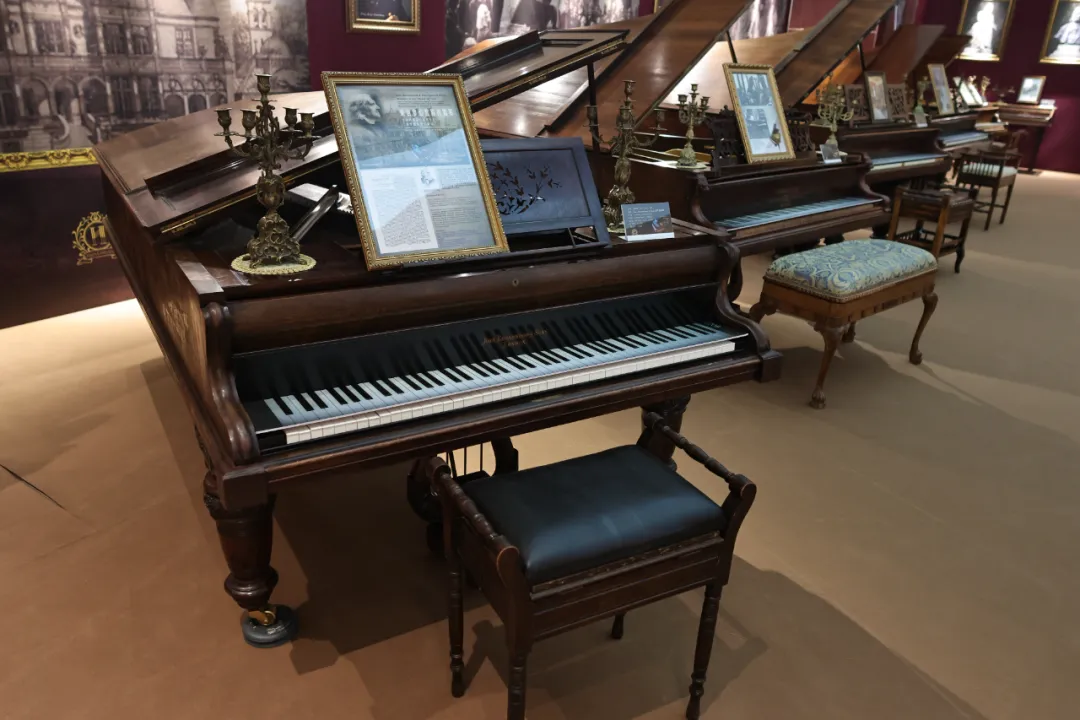
The Shenzhen Longhua Piano Museum houses 258 pianos, all dating back at least a century. Photos by Liu Xudong
All 258 pianos exhibited at the museum date back at least a century, with the oldest being 259 years old. Some of these musical instruments were played by some of the world’s greatest musicians such as Chopin, Beethoven and Liszt.
Notably, all the pianos and exhibits at the museum are owned by the same collector, Hong Kong tycoon Hui Kingyin, who has traveled extensively around the globe to acquire these historical instruments.
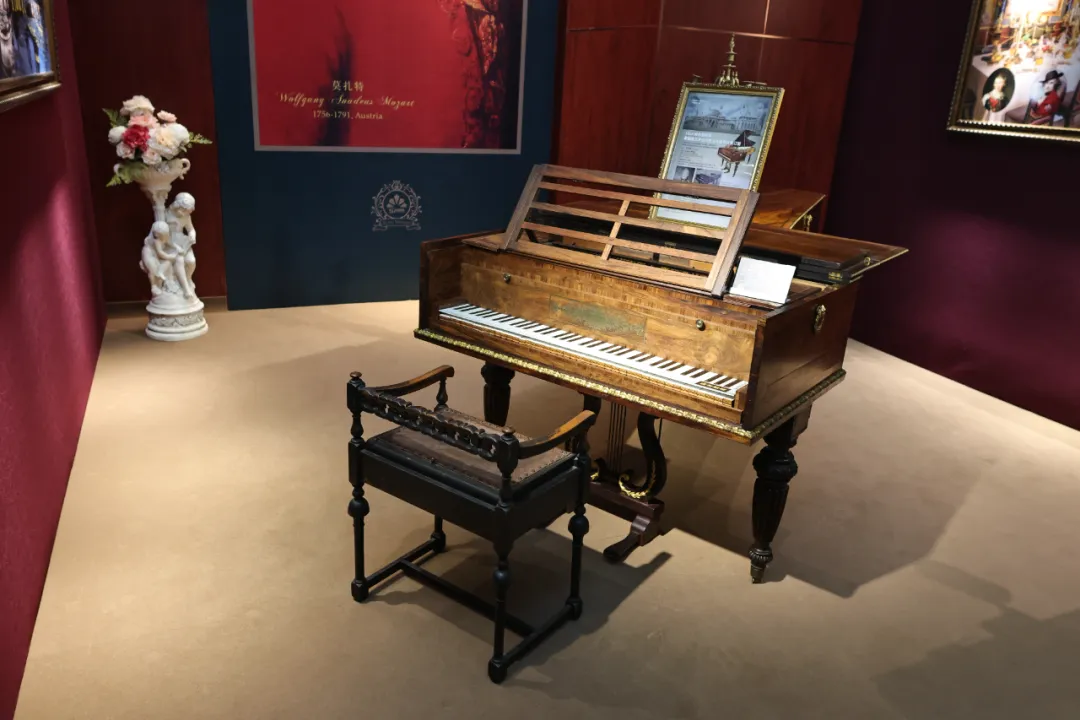
A historic piano is displayed at the museum.
Before finding a permanent venue large enough to house his collection, approximately 100 historical pianos were displayed at the Yaxing Piano City, nestled within the Minle Industrial Zone in Longhua District. When asked why he did not call that venue a piano museum, and instead gave it a name sounding like a piano store, Hui explained that he would reserve the term “museum” for a permanent location that could house at least half of his collection.
Now with an ideal location secured next to an office building in Minzhi Subdistrict, Hui has nearly 260 of his antique pianos exhibited across an area of 5,000 square meters on three floors — so much larger than the previous Yaxing Piano City.
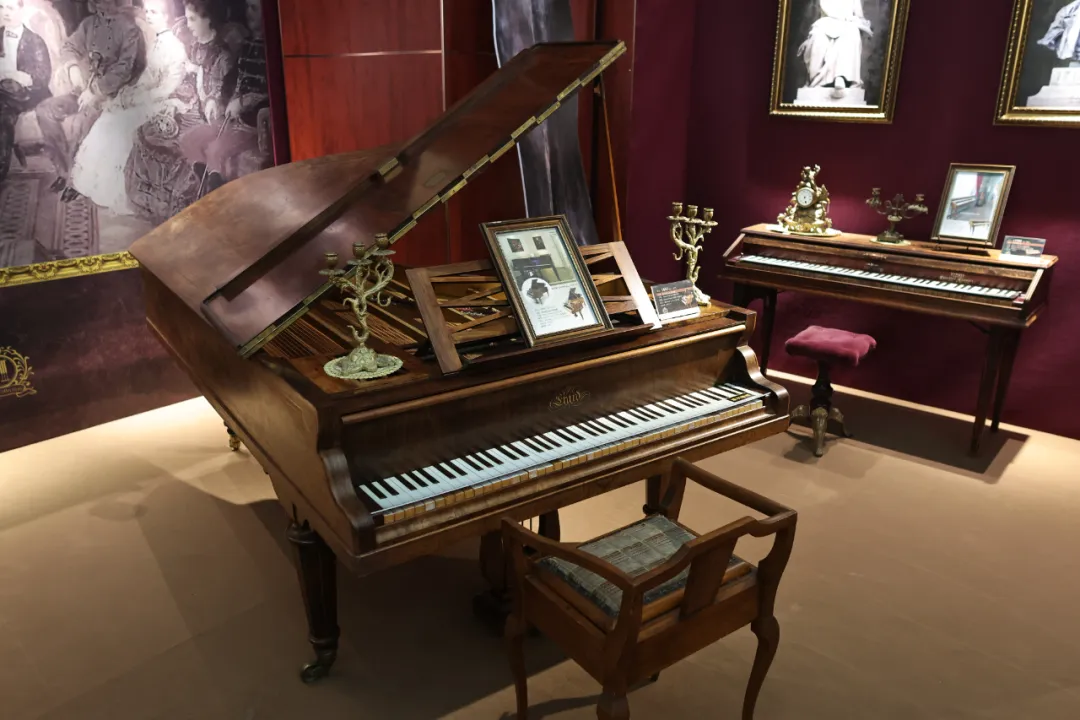
A collection of pianos is on display at the museum.
Historical pianos played by master musicians in the 17th and 18th centuries — ranging from Chopin and Beethoven to Mozart and Liszt — are displayed on the first floor. One highlight is an Erard grand piano played by Haydn in his autumn years. Visitors can also find the world’s only surviving Clementi square piano. An immersive experience is available by scanning QR codes to listen to masterpieces performed by these legendary musicians.
The second and third floors chronicle the development of Chinese and Western pianos, respectively. Among the exhibits, visitors can catch a glimpse of China’s earliest piano — the Oriental Red piano — its once glossy black lacquer long faded, bearing testament to the many hardships it has endured.
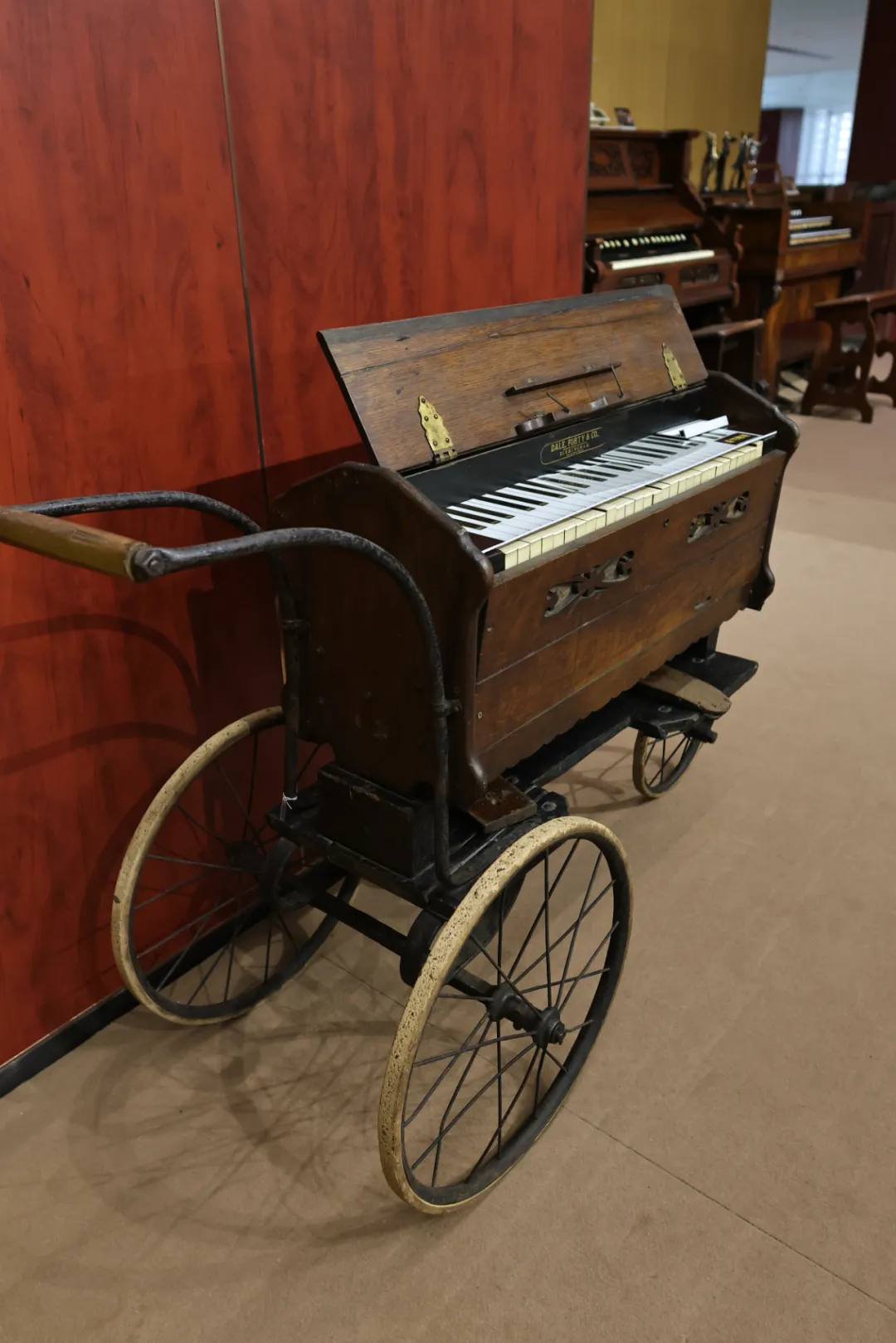
A piano is exhibited at the museum.
Touring the museum feels more like browsing an encyclopedia about antique pianos.
It is worth mentioning that the pianos on display represent less than half of Hui’s entire collection, which now totals 604 instruments from about 300 brands worldwide, including several of the rarest antique pianos in existence. In addition, a total of 2,985 related items, including original accessories such as candlesticks and clocks, are also on display at the museum. Many of these artifacts have been authenticated by Guangdong Provincial Cultural Relics authority and hold significant artistic values.
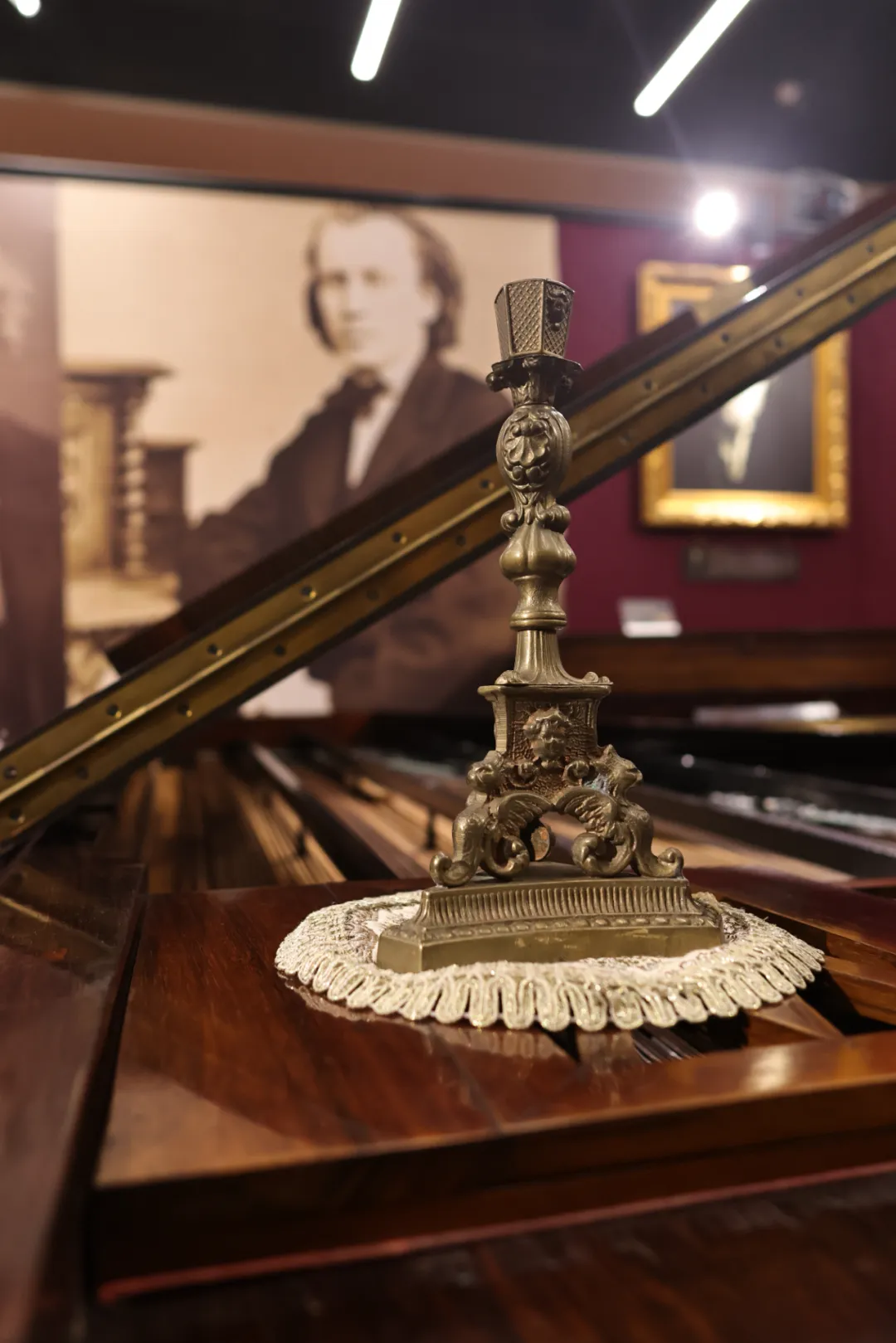
The museum also houses 2,985 piano-related artifacts and memorabilia.
Hui’s life has been closely intertwined with music and pianos. His father, a music teacher in Fujian Province before relocating the family to Hong Kong, along with his siblings, shared a deep passion for pianos.
In 1981, two years after settling in Hong Kong, Hui became the city’s youngest piano teacher and tuner at age 17. By 19, he founded Shenghui Piano Store and Shenghui Music Publishing House. When he was 23, Hui established Hong Kong Starshine Company, the predecessor of Starshine Music International Ltd. A few years later, he ventured into real estate, which helped him accumulate substantial wealth to invest in collecting antique pianos — a pursuit that demands significant expenses, from acquisition to long-term storage and maintenance.
After learning about Shenzhen’s ambition to build a “City of Pianos,” Hui decided to move to Longhua in 2014, and started shipping his collection from around the world to Yaxing Piano City. Hui’s collection includes various types of pianos: common upright pianos, grand pianos, and even “tricycle pianos” and “player pianos.” Among these, the most noteworthy are the extremely rare square pianos.
Square pianos are said to have first appeared in the 17th century and were entirely handcrafted, making each one unique. However, they gradually vanished from the market by the late 19th century due to discontinued production. Hui has now collected 63 square pianos, with production dates ranging from the 17th to the 18th century. On the third floor, visitors can find the museum’s oldest instrument — a square piano made in 1776. Despite being over 250 years old, this square piano remains intact.
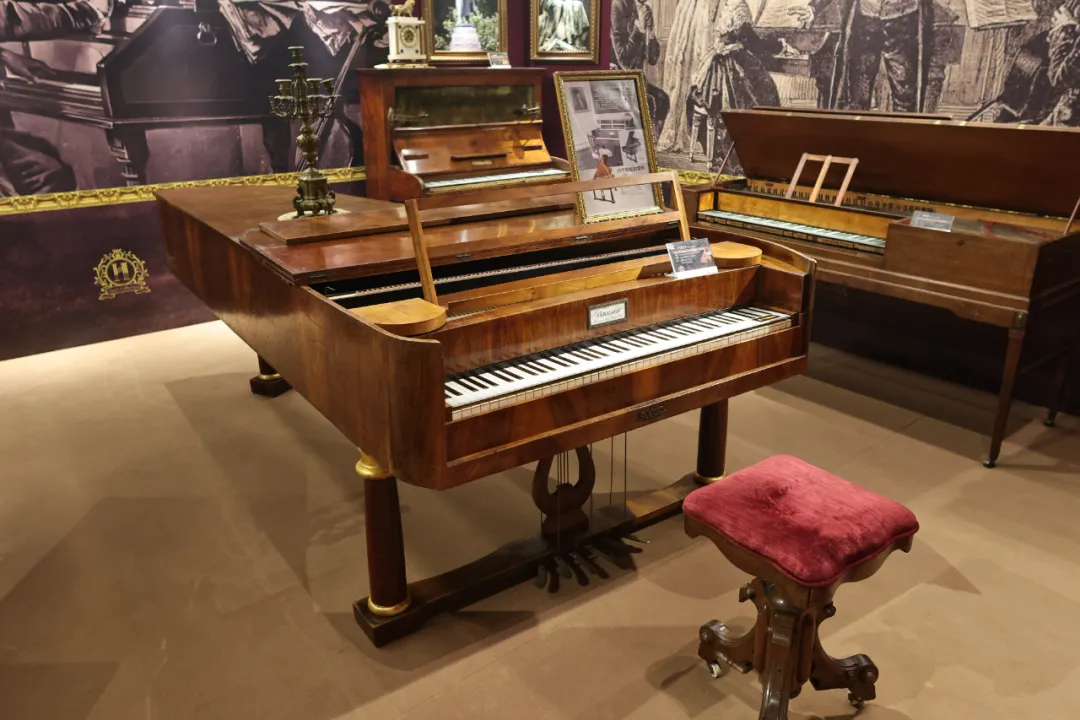
Pianos from different eras are displayed at the museum.
Hui is widely known as a “piano fanatic,” — he started from scratch with pianos and has spent most of his fortune on them. The piano museum in Longhua District serves not only as an encyclopedia of pianos, but also a love letter Hui has write to the instrument.
Now that the museum has opened, plan a visit and let these antique pianos take you on a journey through more than a century of musical history.
Museum Info
Add: Bozhi Building, 65 Minfu North Road, Minzhi Subdistrict, Longhua District
Metro: Line 5 to Minzhi Station (民治站), Exit D, or Line 4 to Hongshan Station (红山站), Exit D1
Opening hours: 8:30 a.m.-5:30 p.m. (Tuesday to Friday), 8:30 a.m.-7:30 p.m. (Saturday and Sunday)
Note: Do not touch the exhibits during visit
Without written authorization from Longhua District People's Government,the content of the site shall not be republished or used in any form
Technical support hotline: 0755-23332038






