THE 5th “Voice of Chinese Youth” foreign language speech contest was held Nov. 23 at the Longhua International Cooperation Center (LICC) in Longhua District.
The event was jointly hosted by the Office of the Foreign Affairs Committee and the Publicity Department of the CPC Longhua District Committee, Shenzhen, and co-organized by the United Nations Institute for Training and Research (UNITAR) Prosperity Alliance Shenzhen (Greater Bay Area) Center and the LICC.
Framed by the U.N. Sustainable Development Goals (SDGs), the program featured speeches on topics such as China’s outstanding traditional culture, Shenzhen’s innovation, and the idea of a community with a shared future for mankind.
It aimed to encourage young people to engage in global sustainable development and help them better understand and tell China’s and Shenzhen’s stories of sustainability and innovation.
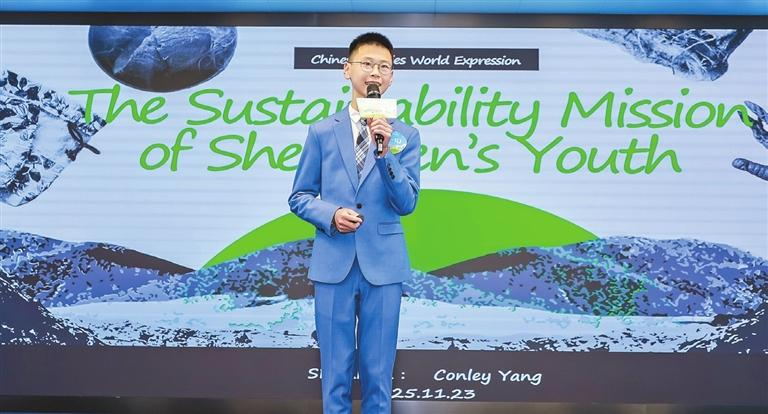
Yang Kangyu, a student at Shenzhen Foreign Languages School (Group), speaks during the 5th “Voice of Chinese Youth” contest. He was the junior high group winner. Photos courtesy of LICC
At the event, contestants masterfully wove together Longhua’s developmental dynamics, traditional Chinese virtues, and a global perspective, presenting a linguistic feast that has balanced intellectual depth with expressive artistry. Some participants used the Longhua digital economy industrial park as a lens, fluently articulating in foreign languages how technology fuels urban progress.
Others integrated traditional Chinese culture with bilingual recitations and physical demonstrations, allowing judges to immerse themselves in the charm of Eastern wisdom. Some closely linked their speeches to the SDGs, citing Shenzhen’s local governance cases to advocate for language as a bridge to localize global initiatives.
Judge Zeng Sa, deputy director of the International Exchange and Cooperation Department of Shenzhen University, emphasized the importance of cross-cultural communication.
She urged contestants to draw on China’s ecological wisdom and connect concrete local cases with global narratives. Zeng recommended cultivating cross-cultural literacy, learning how other cultures conceptualize sustainability, and using sensory, experience-based storytelling to make abstract ideas vivid and relatable.
Lewis Cope, an English teacher at Shenzhen Nanshan Foreign Language School (Group) Second Experimental School, praised the contestants’ ability to explain complex sustainability topics in simple, internationally accessible language.
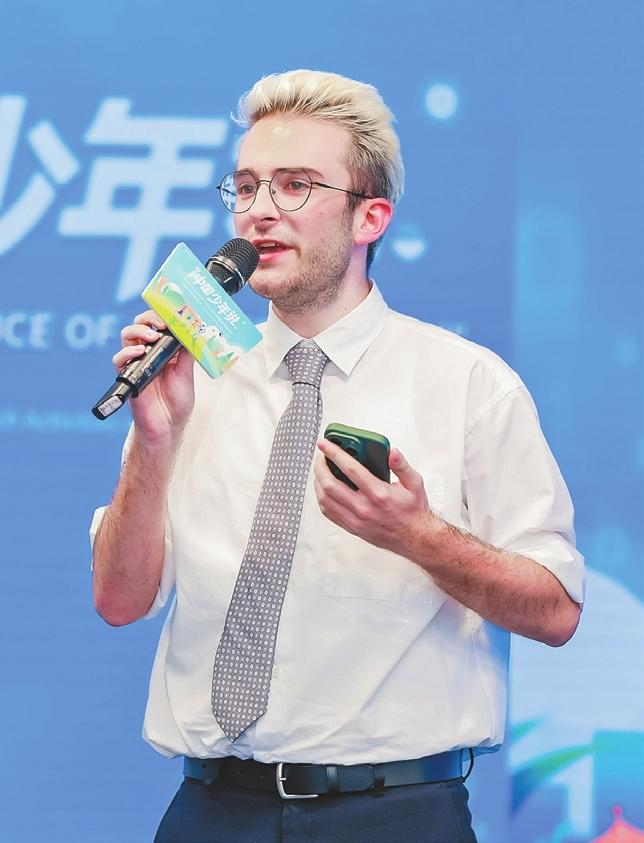
Lewis Cope, an English teacher at Shenzhen Nanshan Foreign Language School (Group), gives comments as a judge.
He highlighted the students’ enthusiasm and preparation, noting their work on vocabulary, intonation, and pacing. Cope said the contest helps build young people’s sense of responsibility and encourages an open, global dialogue on sustainability.
Without written authorization from Longhua District People's Government,the content of the site shall not be republished or used in any form
Technical support hotline: 0755-23332038






