One of China’s busiest transport hubs is now running close to carbon neutrality. Shenzhen North Railway Station in Longhua District has become the country’s first near-zero carbon high-speed rail hub, city transport authorities said, providing a replicable blueprint for sustainable urban transit.
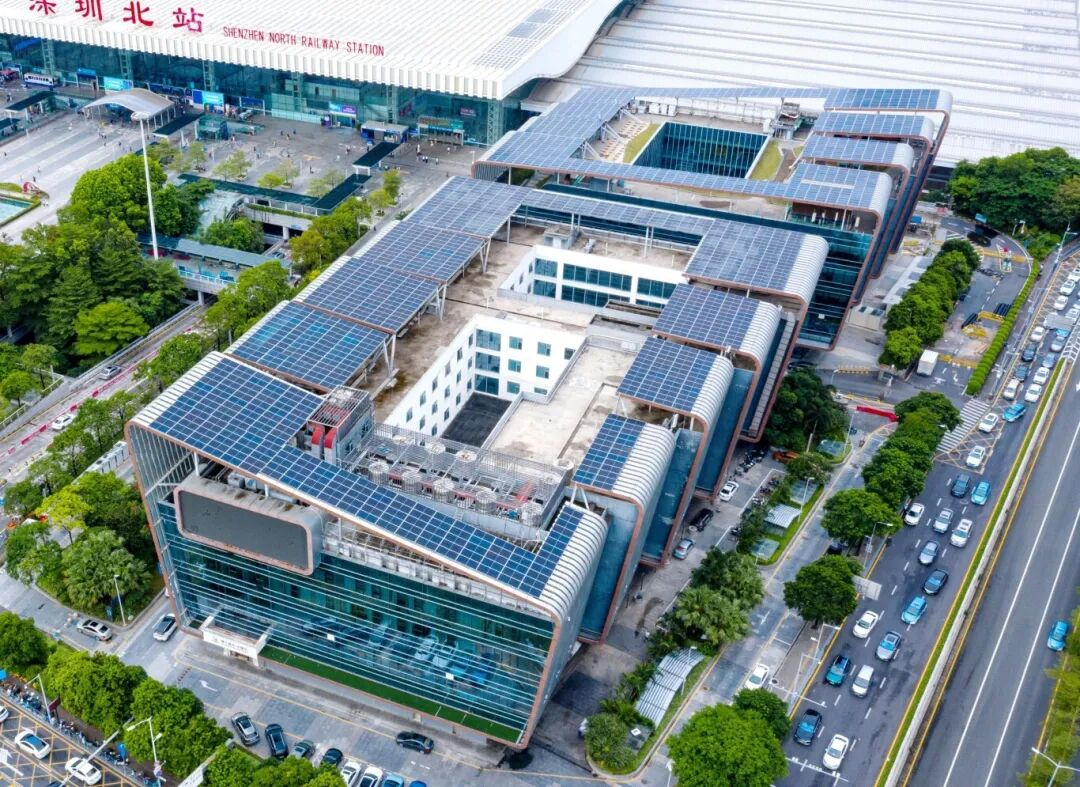
An aerial view of Shenzhen North Railway Station, where solar panels are seamlessly integrated across rooftops, walkways, and architectural facades. Photos courtesy of Shenzhen North Railway Station
A transit hub that thinks for itself, and powers itself
As part of the pilot, the buildings and parking facilities of Shenzhen North Railway Station have been upgraded with a full suite of low-carbon technologies focused on three pillars: clean energy, smart climate control, and intelligent lighting.
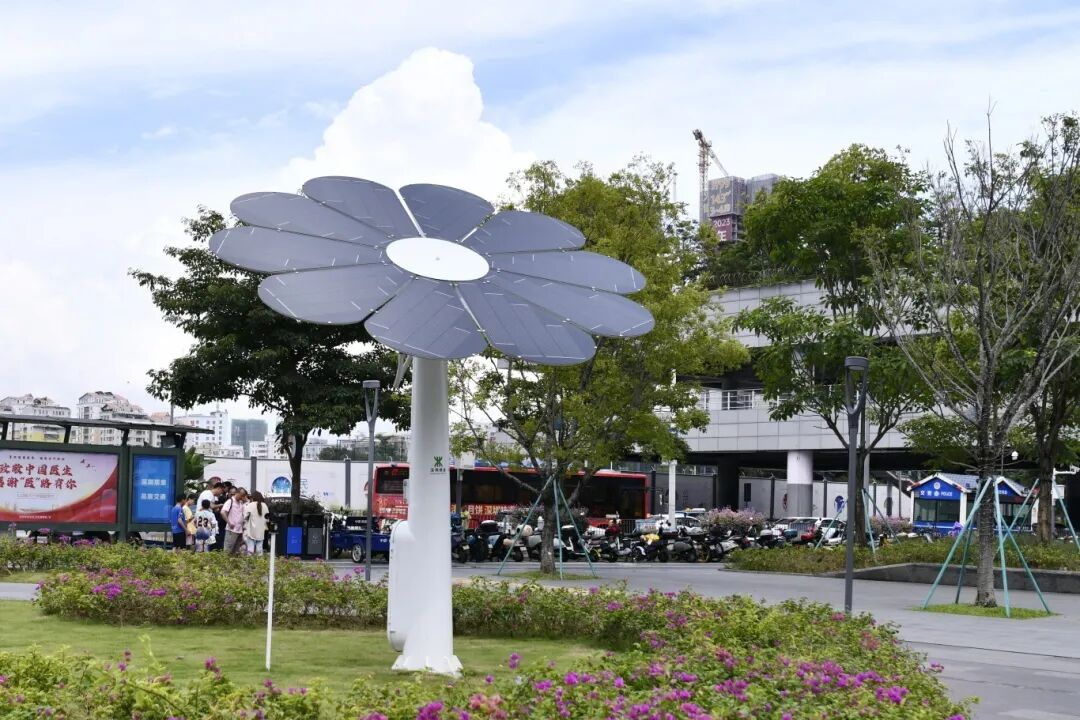
A solar-tracking “photovoltaic sunflower” on the station’s east plaza rotates to follow the sun, maximizing clean energy generation.
One standout feature is a pair of solar-tracking “photovoltaic sunflowers” installed on the station’s east and west plazas. These structures rotate to follow the sun, maximizing energy capture.
Additional solar panels have been seamlessly integrated into rooftops, corridors, and even aluminum façade elements — generating power without compromising the station’s architectural design.
Together, these systems produce 2.97 million kilowatt-hours of electricity annually, cutting carbon emissions by more than 1,340 metric tons per year.

A smart energy management system dynamically adjusts the station’s cooling output to improve efficiency and reduce electricity use.
Inside the station, the air conditioning system is equipped with a smart energy management “brain” that adjusts cooling output dynamically. The east and west plazas now achieve energy savings of 36.7%, enough to cut electricity use by over 5.3 million kilowatt-hours annually.
Even the lights are smart: the underground parking structure uses motion-sensing LEDs that automatically adjust brightness depending on occupancy, eliminating unnecessary usage and saving an additional 1.1 million to 1.2 million kilowatt-hours per year.
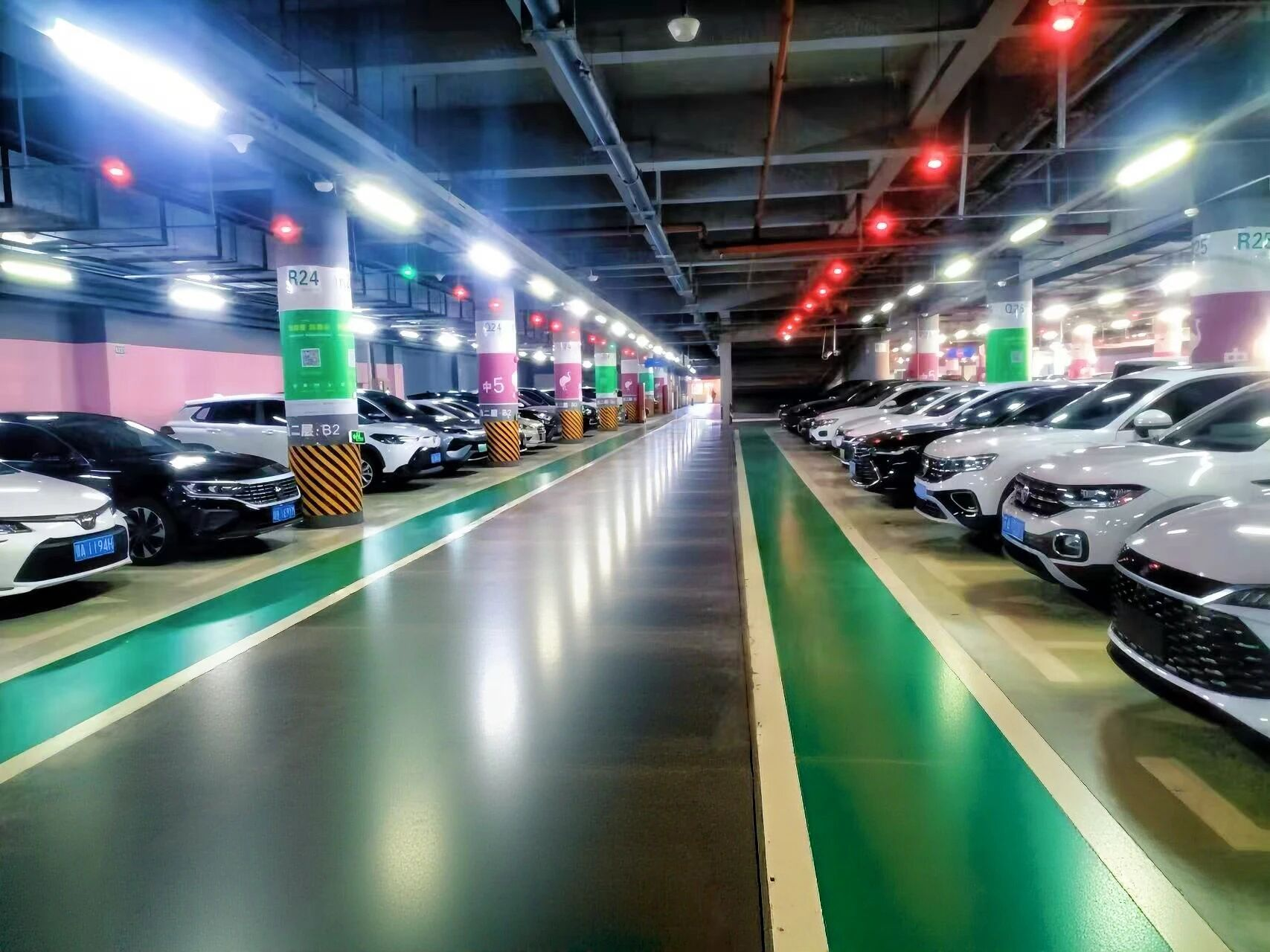
Motion-sensing LED lights in the station’s underground parking garage automatically adjust brightness based on occupancy, reducing energy waste.
From pilot project to citywide blueprint
The Shenzhen North Railway Station project is part of the city’s first wave of near-zero carbon building pilots. It sets a precedent not only for the rail transit sector, but also for large-scale infrastructure aiming to meet China’s national carbon peaking and neutrality goals.
With core targets of at least 40% carbon reduction and renewable energy accounting for no less than 8% of total energy use, the project integrates decarbonization across its full energy and operations chain.
As a core node in the city’s transit network, Shenzhen North Railway Station’s green transformation demonstrates how sustainable design can drive broader progress. More than a single-site upgrade, the project signals Shenzhen’s leadership in building low-carbon infrastructure and advancing the country's dual-carbon goals.
Without written authorization from Longhua District People's Government,the content of the site shall not be republished or used in any form
Technical support hotline: 0755-23332038






