The opening ceremony of Asia-Pacific Digital & Intelligent Economy Sustainable Development Innovation Week was held on July 30 in Shenzhen’s Longhua District, bringing together nearly 200 government officials, international organization representatives, business leaders, and academics from almost 30 countries and regions. The four-day event features industry matchmaking, project collaboration, site visits, and international media engagement.
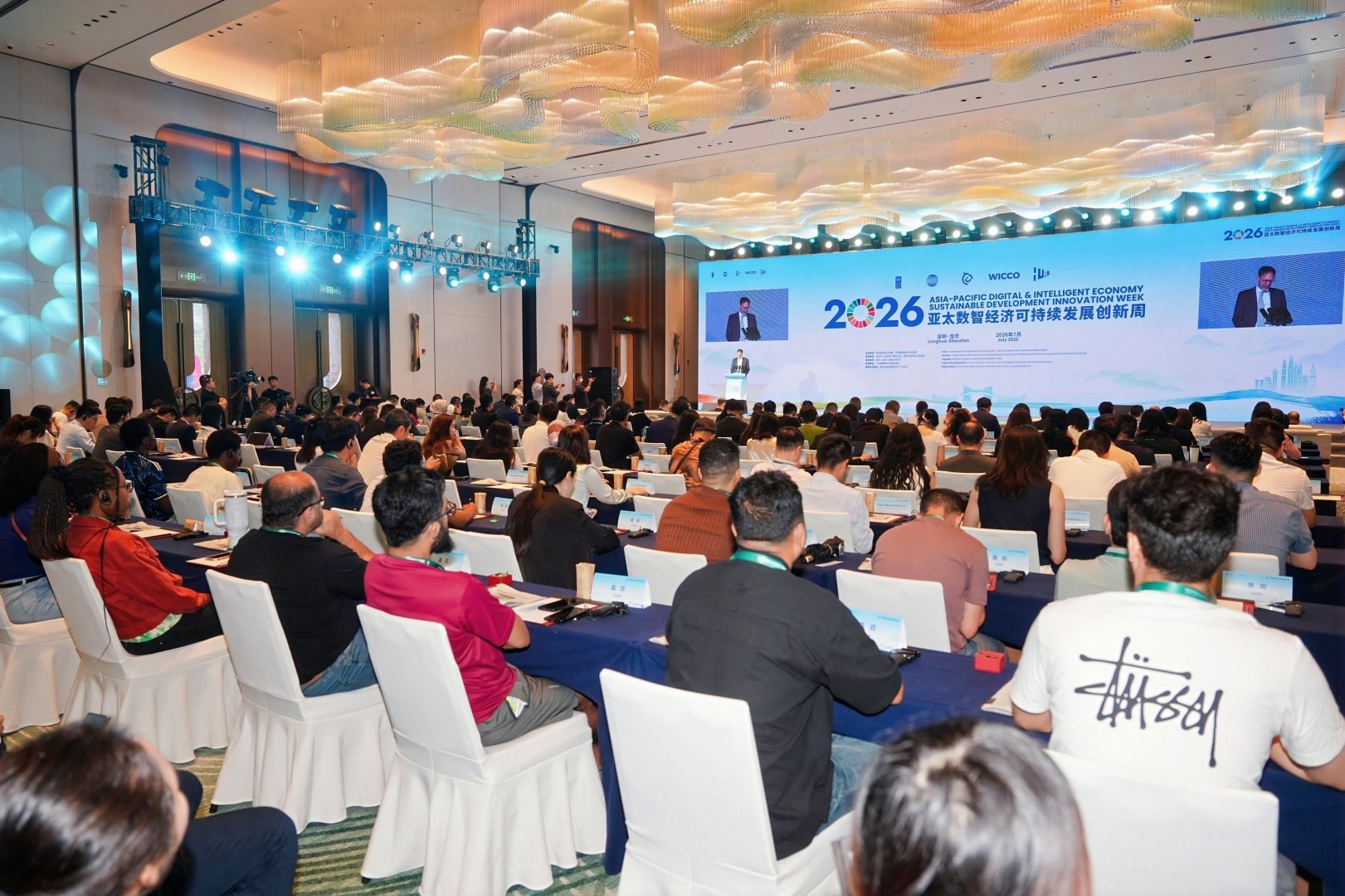
Participants gather for the Asia-Pacific Digital & Intelligent Economy Sustainable Development Innovation Week. The opening ceremony of the event was held in Longhua District on July 30. Photos courtesy of LICC
The “digital and intelligent economy” represents the advanced stage of the digital economy — driven not just by data and connectivity, but by algorithms and intelligence to tackle prediction, decision-making, and personalization. This translates into smart manufacturing, AI-powered healthcare, automated factories, and digital twins.
This event is hosted by the United Nations Development Programme (UNDP) and the World Innovative Cities Cooperation Organization, under the guidance of the Foreign Affairs Office of Shenzhen Municipal People's Government and the People's Government of Longhua District, Shenzhen Municipality. It is organized by the Shenzhen Longhua International Cooperation Center (LICC), with support from the Guangzhou Institute of the Greater Bay Area.
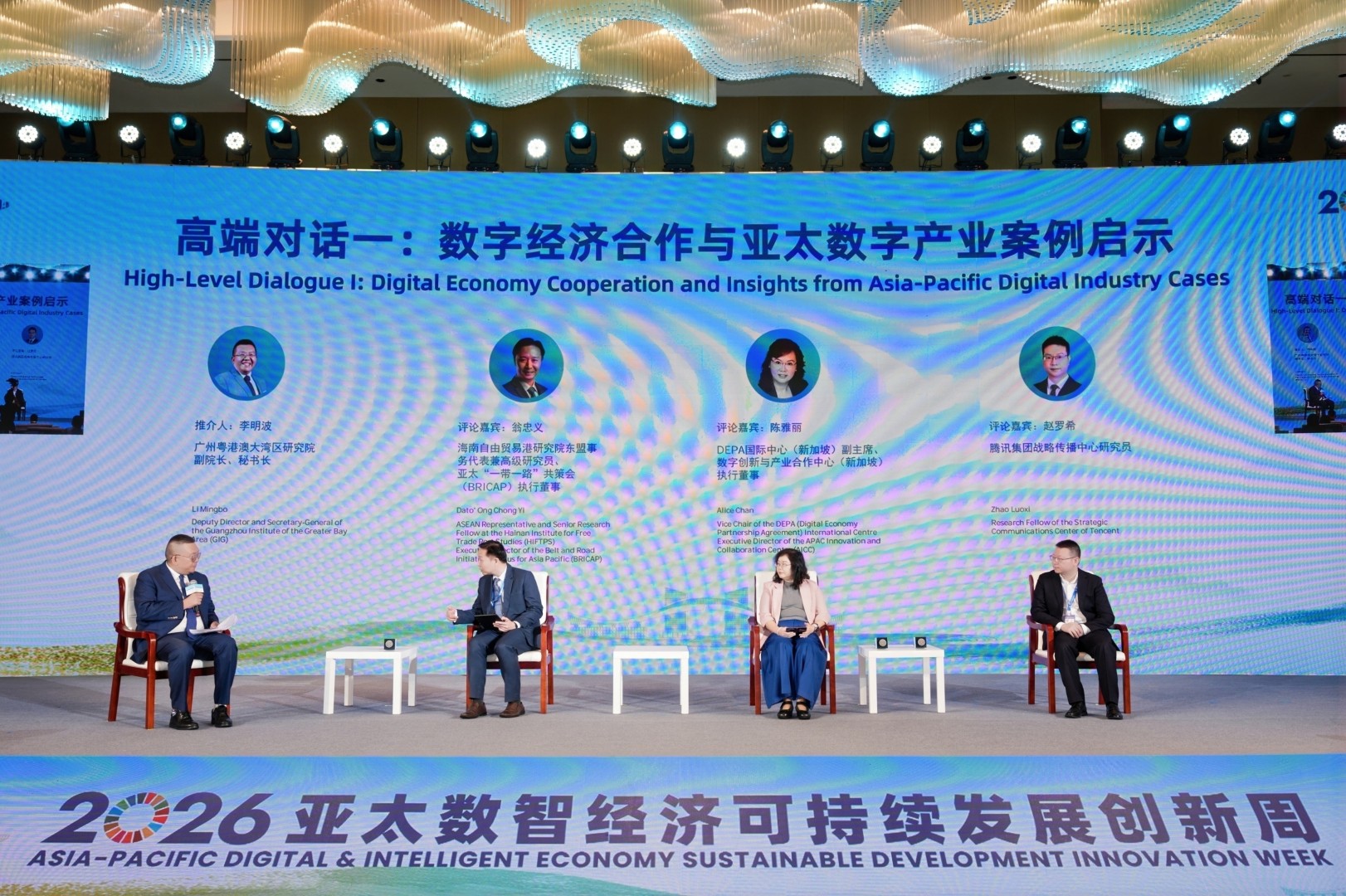
A high-level dialogue on digital economy cooperation.
As AI continues to advance rapidly, Philip Schellekens, chief economist for Asia and the Pacific at the UNDP, outlined his concerns over the economic and social challenges posed by the technology. “The world has changed. We think of 2020 as 2020 BC — not Before Century, but Before ChatGPT,” he said. He warned that AI could widen inequality both within and between countries, citing a recent report co-authored with world’s top universities and institutes. “We think that AI is heralding a new era of rising inequality between countries, following years of convergence in the last 50 years.”
Yet he emphasized that the outcome is not predetermined. “The best way to predict the future is to invent it and to steer it,” he said, calling for people-centerd AI development, responsible governance, and global cooperation — precisely what this conference aims to foster.
Shenzhen has emerged as a laboratory for this transformation, home to over 2,600 AI enterprises covering chips, models, hardware, and applications, forming a robust ecosystem led by giants like Huawei and Tencent.
Schellekens offered a striking assessment: “If you want to see the China of the past, look at Beijing and Xi’an. If you want to see the China of today, look at Shanghai. But if you want to see the China of the future, go to Shenzhen.”
Pak Sudrajat, former Ambassador of Indonesia to China, highlighted Indonesia’s digital progress: 95% 4G coverage, 60–80% mobile phone usage for commerce, and homegrown credit and payment systems. Yet challenges persist — digital talent shortages and cybersecurity threats.
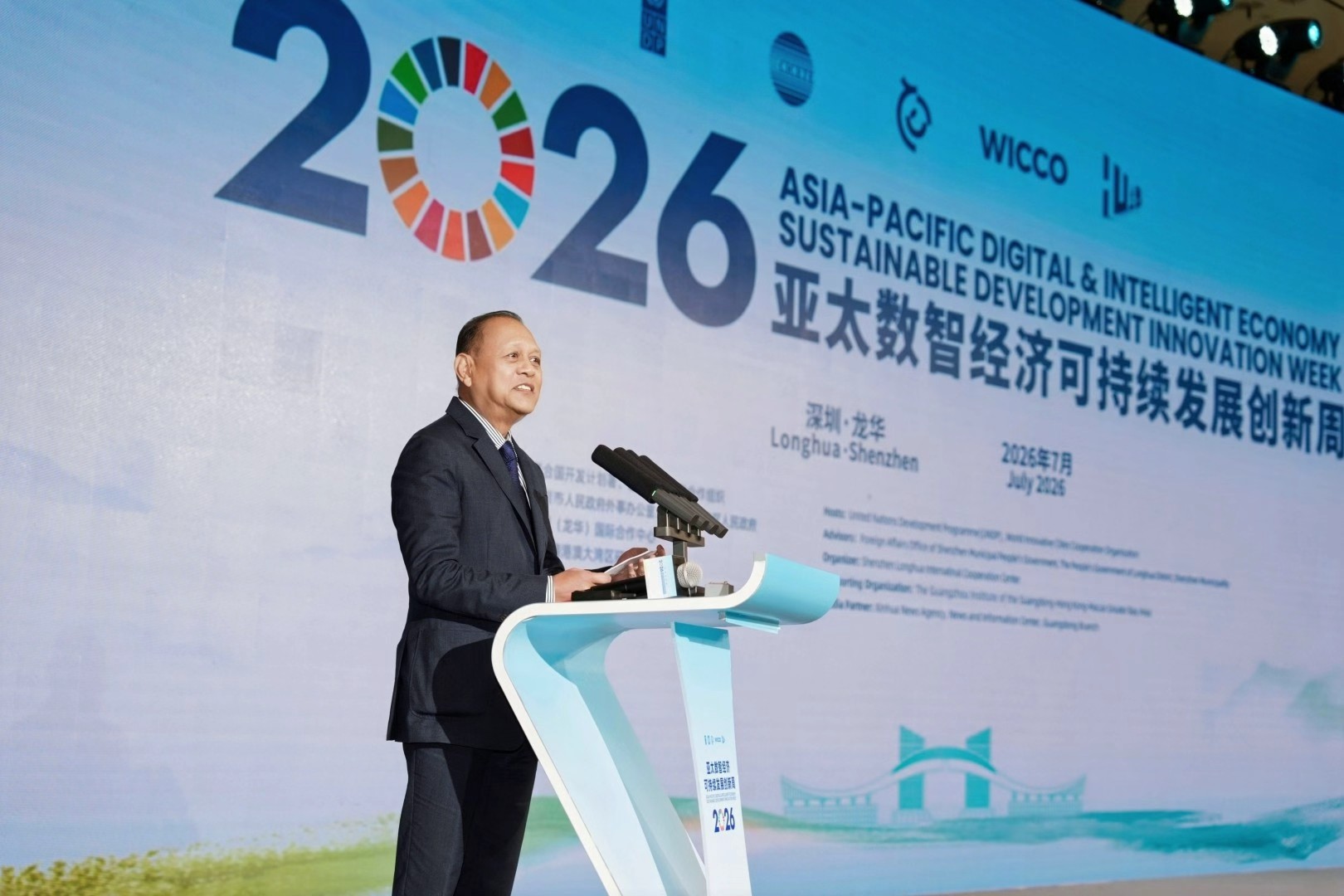
Pak Sudrajat, former Ambassador of Indonesia to China, delivers a speech during the opening ceremony.
On cooperation, he said: “Shenzhen is the Silicon Valley of China. You have technology, speed, and capital. Indonesia would love to cooperate — from software and hardware to AI.” He urged Asian cities to adopt Shenzhen’s “test fast, scale fast” culture, adding: “Shenzhen is the factory of the world, but now it should become the factory of the factory of the world — bringing good things to Asia.”
At the event, 10 Shenzhen-based tech companies showcased their products, ranging from 3D printers and food delivery solutions to humanoid robots. Spanning consumer services and industrial applications, the diverse lineup gave attendees an up-close look at the dynamism of Shenzhen's technological innovation.
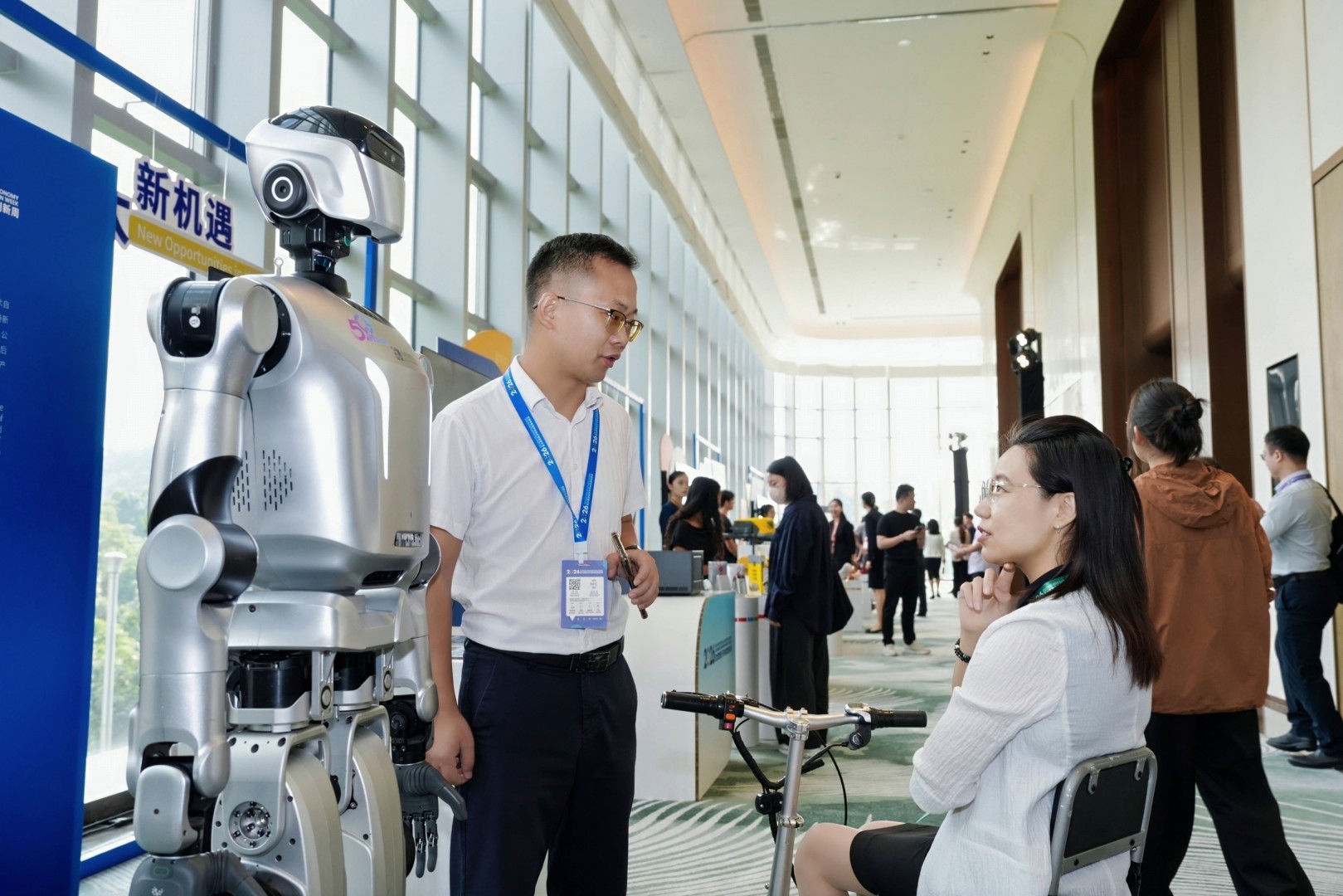
A guest inquires about the humanoid robot at the exhibition area.
Longhua District, which hosts the Innovation Week, is pushing forward in digital intelligent construction, powered by AI. The district is committed to building the LICC which stands as the most comprehensive and broadest-reaching district-level international integrated platform in the Guangdong-Hong Kong-Macao Greater Bay Area. LICC has established an international cooperation network covering over 150 countries and regions, and hosts more than 200 specialized matchmaking and exchange events annually in fields such as the digital economy, intelligent manufacturing, and digital supply chain collaboration.
With APEC’s 2026 Economic Leaders’ Meeting scheduled in Shenzhen in November, the city is positioning itself not just as a host, but as a catalyst for regional digital cooperation. As Sudrajat put it: “Collaboration, ecosystem integration, and speed — because we cannot wait. Technology always leapfrogs.”
Without written authorization from Longhua District People's Government,the content of the site shall not be republished or used in any form
Technical support hotline: 0755-23332038






